What Causes Fine Scratches and How to Prevent Them
Most car owners notice the scratches before they can explain them. You washed the car carefully, dried it properly, and yet, in direct sunlight, the paint still looks hazy and worn. It is one of the most common frustrations we hear from car owners in the York area.
Fine scratches rarely come from accidents. They come from everyday habits, and most people do not realize the damage is happening until it is already visible.
The Main Causes of Fine Scratches
Improper Washing Technique
This is the biggest one. The way most people wash their car is the number one source of fine scratches, and most do not know it.
Old sponges, household rags, and dirty wash mitts trap grit and drag it across the surface with every pass. Even wiping dust or pollen off with a dry cloth causes micro-scratching. The particles are small, but the friction is real.
A study by researchers at the University of Texas found that a single home hand-wash can leave scratches as deep as one-tenth of the paint's total thickness when the wrong tools or technique is used. That damage adds up quickly over time.
The two-bucket wash method is the standard fix. One bucket for clean soapy water, one for rinsing your mitt between passes. It keeps grit from going back onto the paint.
Automatic Car Washes
Brush-style automatic washes are hard on clear coats. The brushes collect particles from every car before yours and carry them across your paint. Even washes marketed as soft-touch cause swirl marks over time. Touchless washes reduce that risk but often rely on stronger chemicals to compensate, which can wear down the clear coat.
Road Debris and Daily Driving
Every time you drive, your vehicle picks up fine particles. Sand, dust, and grit settle onto the surface and get disturbed by wind, rain, or anything that brushes the car. On roads like I-83 or Route 30 around York, gravel shoulders and construction zones make this worse than most drivers realize.
Environmental Fallout
Bird droppings, tree sap, and bug splatter are acidic. Left sitting on the paint, they etch into the clear coat without any physical contact. Pennsylvania winters bring road salt and de-icing chemicals, both of which are corrosive and soften the clear coat over time if not rinsed away quickly.
York sits in a region that sees all four seasons harshly. The combination of summer sap from wooded areas near places like Nixon Park and winter road treatment on Route 30 means your paint is dealing with environmental fallout year-round.
Parking Lots
Car doors, shopping carts, jacket zippers, and people walking past all leave marks. Most of these happen fast and go unnoticed. By the time you see the scratch, there is no way to trace when it happened.
Why Paint Protection Film Is the Best Long-Term Defense
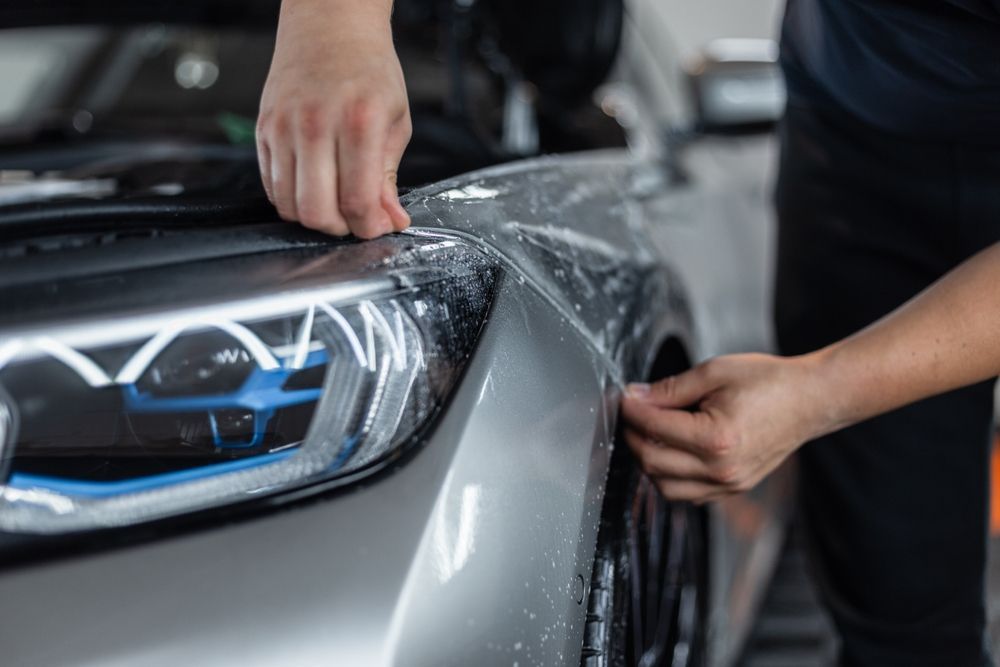
Paint protection film is a clear thermoplastic urethane film applied directly over your paint. It takes the abuse that would otherwise go straight to your clear coat. Rock chips, road grit, light abrasion from washing, and chemical fallout all hit the film rather than the surface.
Premium PPF also has self-healing properties. Minor surface scratches in the film itself disappear with heat from the sun or warm water. The paint underneath stays untouched.
At TC Detailing and Coatings, every PPF installation starts with a thorough decontamination and paint inspection. If the vehicle has existing scratches, we complete the paint correction first. The film goes on over a clean, corrected surface. Installing PPF over damaged paint only locks those flaws underneath.
The best time to apply paint protection film to a vehicle is when the paint is already in good condition, whether on a new car or one that has just been corrected. From that point on, the film handles the damage instead of your paint.
PPF and
ceramic coating
are often combined. The film covers high-impact areas such as the hood, front bumper, and mirrors. Ceramic coating covers the film and the rest of the vehicle, adding a hard, hydrophobic layer that resists light scratches and makes the car easier to keep clean.
Ready to Stop the Scratches Before They Start?
Fine scratches are slow damage. They build up over months until the paint looks nothing like it did when you bought the car.
TC Detailing and Coatings is based in York, PA, and serves Hanover, Lancaster, Harrisburg, and the surrounding areas. If you are not sure what your vehicle needs, we will take a look and give you a straight answer with no pressure.
Call us at (717) 479-0479 to book an appointment or ask questions. We will walk you through the options and put together a protection plan that fits your car and your budget.
Frequently Asked Questions
Does paint protection film prevent fine scratches?
Yes. Paint protection film sits over your clear coat and absorbs light abrasion, road debris impacts, and daily contact that would otherwise scratch your paint. It is the most effective physical barrier available for everyday driving conditions.
Can fine scratches be removed?
Scratches that stay within the clear coat can often be polished out with a cutting compound or light polish. Scratches that reach the base color require professional paint correction. A technician can check the depth under proper lighting and tell you exactly what is needed.
How long does paint protection film last?
When installed correctly, a quality PPF typically lasts 5 to 10 years, depending on the product tier and the vehicle's maintenance. Most professional-grade films come with a manufacturer's warranty that covers yellowing, cracking, and delamination.
Is paint protection film worth it on a used car?
It depends on the condition of the paint. If the vehicle has existing scratches or oxidation, paint correction must be performed first. Once the surface is clean and restored, PPF is a smart investment to protect that work going forward.
What is the difference between ceramic coating and paint protection film for scratch protection?
Ceramic coating bonds to the clear coat, creating a hard, hydrophobic surface that resists light contamination and makes washing easier. It is not thick enough to absorb impact. Paint protection film is a physical layer that takes the hit instead of your paint. The two work well together for comprehensive protection.
Will automatic car washes damage my paint protection film?
Brush-style washes can scratch the surface of PPF just as they do bare paint. Touchless options are safer. For best results, hand-wash your vehicle with clean microfiber tools and proper technique.
How can I tell if my car already has fine scratches?
Shine a phone flashlight across the paint at a low angle in a shaded or dim area. Fine scratches and swirl marks appear as a faint web of lines. They are usually invisible in normal daylight but obvious under direct or harsh lighting.
About the Author
Taylor Claubaugh | Owner, TC Detailing & Coatings
York, PA | Automotive Detailing & Vehicle Care Expert
Taylor Claubaugh is the owner of TC Detailing & Coatings, serving York, Pennsylvania and the surrounding areas with a strong commitment to quality and consistency. He built the business with a focus on doing things the right way, delivering detail-oriented work that helps maintain and enhance the condition of every vehicle. Taylor takes pride in ensuring each job is handled with care, precision, and a high standard from start to finish.
With a hands-on approach, Taylor stays involved in the day-to-day operations to ensure every vehicle receives the attention it deserves. He focuses on creating a reliable experience through clear communication and dependable service. Through TC Detailing & Coatings, Taylor continues to provide automotive care that helps protect long-term value while delivering results clients can trust.